
Indie Frame #7 — Rafael Proença and Steady
This week we “travel” to Brazil to meet Rafael Proença, the developer behind Steady — a minimalist, privacy-first workout tracker built exclusively for iPhone and Apple Watch.
So, tell me all about Steady. (Great name by the way!)
Steady is a minimalist workout tracker built exclusively for Apple devices. At its core it’s designed around a simple idea: helping people focus on their own progress instead of everything else.
There are no social feeds, no ads, and no attempts to become an all-in-one fitness platform. It’s just a fast, privacy-first workout tracker built specifically for strength training and gym weightlifting, helping people train consistently and progressively.
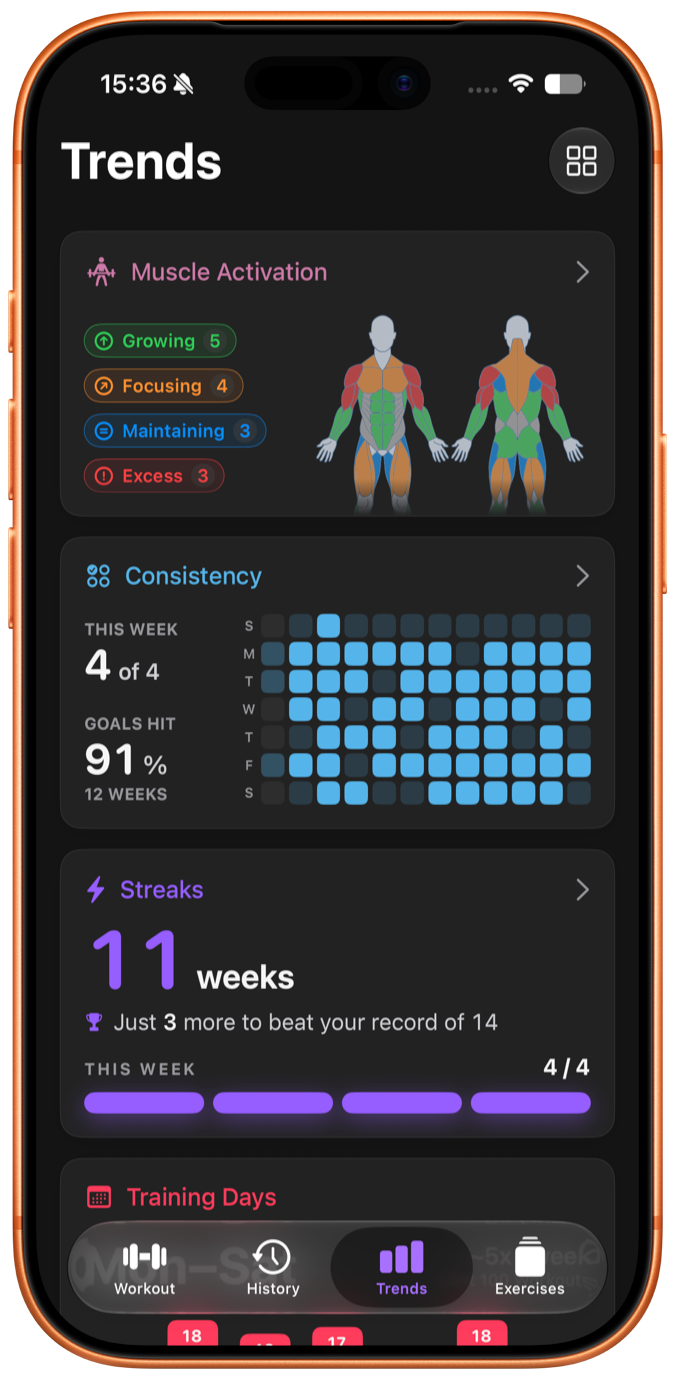

It’s been on the App Store for a little over a year now. One of the most rewarding moments has been seeing people genuinely appreciate the philosophy behind it. Many users tell me they chose Steady specifically because it isn’t trying to become a social network.
The biggest challenge hasn’t been building the app — it’s been getting people to discover it. Once someone finds Steady, they usually stick with it. We have a surprisingly high conversion rate from free trials to paying subscribers, and the feedback from users has been incredibly encouraging. The hard part is simply getting the app in front of more people.
So while I wouldn’t call Steady a success based purely on the number of users yet, I absolutely consider it a success in terms of user satisfaction. Knowing that people genuinely enjoy using something I’ve built and rely on it for their training is incredibly rewarding.
Steady is my first published app!
That part about discovery is very familiar. We have a similar situation with Shareshot, with really good loyalty/retention but downloads are tough. Right, so I know nothing about weight lifting… is that a market that you already had a way to reach? How do you get downloads?
I’ve been strength training for years, so I understood the problems I wanted to solve, but I definitely didn’t have an audience waiting for the app. In fact, I don’t have a presence on social media, and I’ve never really enjoyed the whole social media game. That made getting the first users especially difficult, since that’s where most people discover new products today.
Right before launch, I made a couple of posts on Reddit inviting people to join the beta, and that helped generate some early traction and valuable feedback. Reddit can be a difficult place for indie developers, though. If you’re not an active member of the community, self-promotion is often met with skepticism, so it’s something I’ve always tried to approach carefully.
When Steady launched, I also reached out to a number of publications with a press release. Most didn’t pick up the story, but one Brazilian tech website did. Since I’m a Brazilian indie developer, that angle resonated with readers, and many of Steady’s first users came from Brazil. Even today, Brazil represents well over half of our daily active users.
Beyond that, the app has grown mostly through organic App Store discovery and word of mouth. That has been the most rewarding source of growth, because it means people are recommending Steady simply because they enjoy using it.
Oh the regional angle is very interesting! For us it’s mainly USA then UK and Germany, and the rest is a long tail — presumably because we’re a “tech nerd” app in many ways. What is your background, I mean how did you end up writing a weightlifting app yourself?
I’m not a software developer by profession, but I do come from a technical background. About 20 years ago, I used to contribute to open-source software for Linux but that was mostly a hobby, and throughout my professional life I’ve regularly written code for automation, scripting, and server administration. Building a full iOS app was a very different challenge, but programming has always been something I’ve enjoyed.
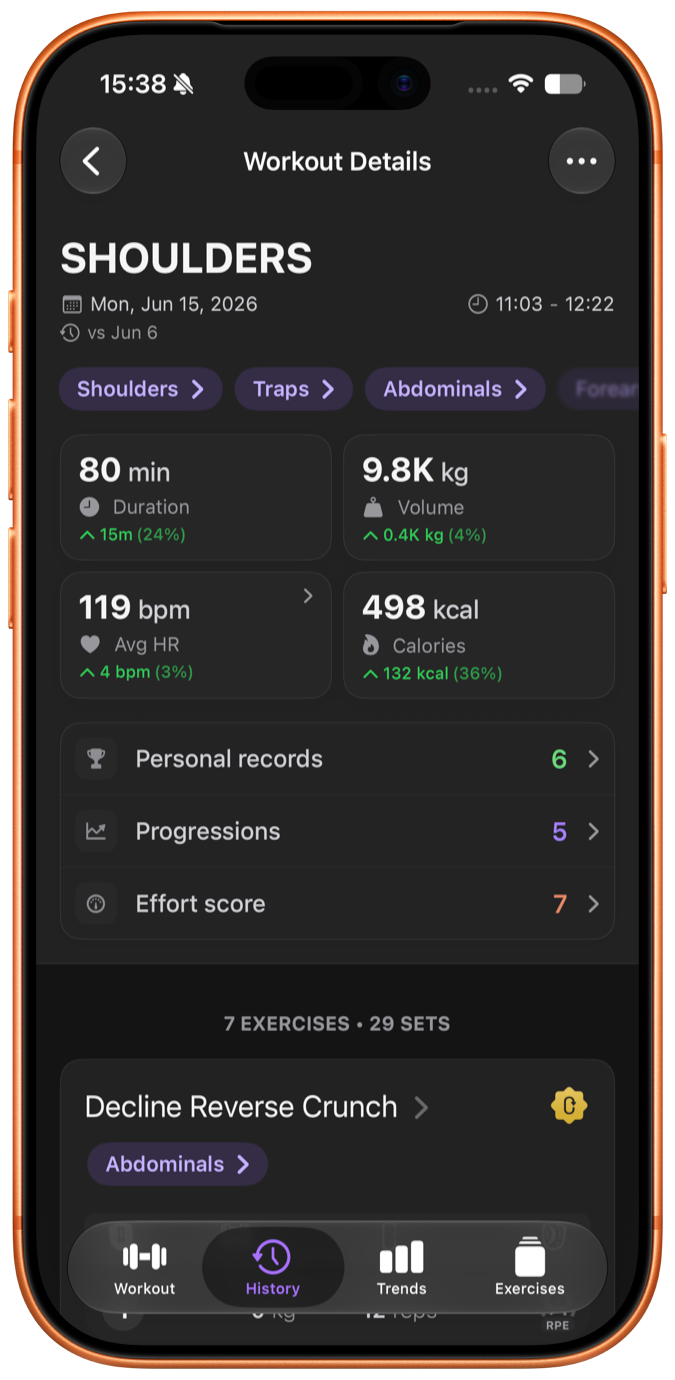
Strength training has also been one of my biggest priorities for many years, and it’s become even more important to me over time. In a way, Steady has become part of that journey. Building the app has helped me stay more consistent with my own training, and my own training continuously inspires improvements to the app. It’s been a nice cycle of self-improvement.
Steady started because I couldn’t find an app that matched how I wanted to train. Most apps were either overloaded with features, filled with ads, trying to become social networks, or put even basic workout logging behind a paywall. I wanted something simpler that respected my privacy and that anyone could use to log their workouts for free. The paid version exists for people who want more advanced features, but I never wanted the ability to simply track your workouts to require a subscription.
One fun part of building Steady is that my development cycle often follows my workouts. I’ll build a feature in the evening, test it during my workout the next morning, notice things that could be better, and come home to refine it. That daily feedback loop has shaped almost every part of the app for over a year.
Yes! This is the secret sauce of indie apps if you ask me. You have to be living it. Have you used any other ways to get installs? We’ve tried various things including podcast ads, site sponsorships and Meta ads and nothing really moved the needle much for us so far.
I’ve experimented with a few things, but honestly nothing has dramatically changed the trajectory.
I’ve also experimented with Apple Search Ads, but they didn’t move the needle much for me. I found them significantly more expensive than the return they generated, so I eventually stopped investing in them.

The truth is, marketing has probably been my biggest weakness as an indie developer. I genuinely don’t enjoy it. What excites me is building features, refining the interface, and making the app better. When I sit down to work each day, all I want to do is improve Steady. When I think about promoting it instead, it honestly drains my energy.
That doesn’t mean I’ve given up on marketing — it just means it’s something I’m still learning. I haven’t really explored social media or worked with influencers yet, but I do think that could make a significant difference. It’s simply something I haven’t gotten around to doing.
For now, most of Steady’s growth has come organically through App Store discovery and, more importantly, word of mouth. To me, that’s the most meaningful kind of growth because it means people are recommending the app simply because they enjoy using it.
I get it, I also find marketing a grind in general. We didn’t do enough marketing for our previous app Captionista, and it did not do so well. Shareshot has seen a lot more success because we thought a lot more about all aspects of the marketing. It does pay off, but it’s still a chore! In-app marketing matters too, and I hear you have an interesting use case for Shareshot in your “What’s New” UI…
I love release notes — probably more than the average user.
I wanted the “What’s New” section inside Steady to feel like a product announcement instead of a wall of text. I had this idea of presenting release notes almost like Instagram Stories or a WhatsApp Status — an interaction pattern people are already familiar with. Instead of scrolling through a long changelog, users can simply swipe through beautiful cards showcasing what’s new in the app.
Shareshot made it really easy to frame iPhone screenshots into polished images that became the centerpiece of that experience. Every update now includes a set of carefully designed announcement cards, both inside the app and on a blog post on the website, that visually communicate the new features rather than relying only on text. Using Shareshot it is just a drag and drop and saved me hours, specially since I usually push a big update every 3 weeks.

I thought it was a novel approach, and users have really responded well to it. One feature I particularly like is that people can leave feedback directly from those announcement cards, so the release notes have become more than just a list of changes — they’ve become a conversation with users about each new release.
I love that idea! I’ve long thought about including past improvements in our What’s New onboarding too. People don’t always run every release and can miss out. Now, your product website is gorgeous! Do you have any tips to share with other indies around marketing or product design?
Thank you!
I don’t think I’m particularly good at marketing, so I’m probably not the best person to give advice on that. In fact, it’s probably the area where I struggle the most as an indie developer. Product design, though — that’s something I care deeply about.
I’m constantly staring at the app, looking for ways to make it better. More often than not, the biggest improvements aren’t major new features — they’re the tiny details. A well-placed haptic tap, a slightly different font size, improved typography, better contrast, a more balanced layout, or a button that’s just a little easier to reach. None of those changes are exciting on their own, but together they create an experience that simply feels better to use.
I think that’s the interesting thing about good design. Most users can’t necessarily explain why an app feels polished, but they absolutely notice how it makes them feel. They instinctively know when an interface is pleasant, effortless, and thoughtfully designed, even if they can’t point to a specific reason.
Of course, having a clear product philosophy also helps. Every decision I make for Steady comes back to the same question: “Does this help someone focus on their progress?” That philosophy influences everything — from the interface, to the website, to the marketing copy — and it makes design decisions much easier because there’s always a clear direction to follow.
Ah but of course a lot of that is the marketing… at least that’s what we like to tell ourselves! It feels like Steady really would be a good pairing for some fitness creators. In terms of revenue, what kind of paywall mechanism do you have and have you learned anything through the releases?
Steady has a very simple business model. The app is free to download and includes all the essentials for tracking workouts. More advanced features — like intelligent progression, multiple programs, and power-user tools — are available through either an annual subscription or a lifetime purchase.
During onboarding, the final step gives users the option to start a free 14-day trial, and that’s how I’d ideally like everyone to begin their journey with Steady. I want people to experience the app with every feature unlocked before deciding whether it’s worth paying for. If they decide to continue using the generous free version afterward, that’s completely fine with me. My goal is to build trust first, not to maximize short-term revenue. In fact, because the free version is so capable, many users may never feel the need to upgrade — and I’m okay with that.
One thing I’ve learned is that small changes to a paywall can have a surprisingly large impact. I use RevenueCat’s paywall system, which makes A/B testing incredibly easy, and over the past year I’ve run about five experiments, each lasting one or two months. Some of the results were remarkable: improvements ranged anywhere from around 5% to as much as 35% increase in trial starts just by changing the copy, tweaking a button color, or trying a different layout. It sounds almost cliché, but those little experiments really do matter.
I don’t think there’s a universal “best” paywall that works for every app. Every audience is different. My biggest takeaway is that indie developers shouldn’t assume their first paywall is the right one. Experiment, measure the results, and keep iterating — you’ll probably be surprised by what resonates with your own users.
Definitely. We’ve not done enough experimenting with our paywall, although it does convert pretty well already. Do you have any plans for Steady based off what has come out at WWDC? No need to share feature details but maybe new APIs you are thinking of using.
Absolutely. Every year, WWDC is like a real event for me. Since the keynote, I’ve been spending at least a couple of hours every day studying the new APIs, watching the WWDC sessions, reading the documentation, and sketching ideas for how they could improve Steady. I honestly still very far behind on my reading list regarding new APIs.
One thing I’ve already started working on—and actually have a working prototype for — is adopting Apple Foundation Models inside Steady. I’m really excited about what on-device AI makes possible because it lets me solve problems that simply weren’t possible with traditional, deterministic programming. I can now provide the model with the right context and receive reasoned results that open up entirely new possibilities for the user experience.
I can’t share the specifics just yet, but I can say what it isn’t: it’s not about chatting with your workout app. I think that’s the most obvious application of AI, but not necessarily the most useful one. My goal isn’t to add AI for the sake of saying the app has AI.
I think the best AI features are the ones users barely notice. They quietly remove friction, make better decisions, or help in subtle ways that feel natural. That’s when software starts to feel a little magical — not because you’re talking to an assistant, but because the app seems to understand what you need before you ask. That’s exactly the direction I’m exploring for Steady, and it’s no coincidence that the feature I’m building for the iOS 27 release actually has the word “Magic” in its name.
I totally agree with that. I’m still trying to understand all the new App Intents stuff, because you know… we have a lot of them! Thanks so much for sharing Rafael.
Our thanks to Rafael for taking the time to chat with us! You can find Steady on the App Store.
If you are an indie who enjoys using Shareshot and fancy being featured in a future instalment of “Indie Frame”, please contact me. We love to share the love!